Wednesday, April 24, 2013

Final Project: Using Ideas from Pinterest to Engage Students


Whether you are going to be a future teacher or parent, searching for ideas to engage our youth into reading can be a challenge. With the advent of the internet, ideas are now shared across the world faster than ever.  Websites like Pinterest allow the best ideas of parents and teachers to be shared instantly for all to access.  Sites like these provide a resource of quality educational material that we as educators are now just starting to tap into.  
My grandmother, a teacher for over 45 years, once told me that one does not become a reader until one becomes engaged in reading. I believe the three of the main forces behind a child’s engagement in reading include a motivation to read, a comprehension of what they read, and establishing a solid vocabulary foundation.  While searching the website Pinterest, I found a wealth of resources related to my personal “three pillars of reading engagement”.  In the description box, I rewrote the description to better explain the idea or to describe how I would implement it into the classroom.  The more I searched for Educational ideas on Pinterest, the more I found how they directly related to the concepts we have been learning this semester in EDUTL 5468.  

Motivation
In the course textbook Teaching Reading in the 21st Century, the issue of motivation is highlighted quite frequently. “Research has repeatedly verified that if students are going to be motivated and engaged in school and learn from their schoolwork, they need to succeed at a vast majority of the tasks they undertake (Graves, Juel, & Graves, 2007, p. 50).”  Graves goes on to say, “A successful reading experience is one that the reader finds enjoyable, informative, or thought provoking… a successful reading experience is often means to a larger goal (Graves et al., 2007, p. 51).

When a child first begins to read, their motivation may be as simple as the “larger goal” receiving a bag of gummy worms to eat during reading time.  However, the hope is that that simple motivation of receiving a bag of gummy worms will turn into a motivation of receiving a larger goal of enjoyment, information, and inspiration once the student gives reading a chance.  The student may not of ever of read if they were not motivated by the gummy worms, but now has given reading a try and is motivated to continue for a new set of reasons.
Students also stay motivated when their success is tracked.  Ideas on my board such as the “silent reading chains” helps students visually track their progress and may incite them to read more to keep up with their peers.  I encourage you to check out my Pinterest account for other great ways to motivate students to read!

Comprehension
From personal and professional experience, I know that developing readers comprehend best when they implement strategies they learn in the classroom.  As Graves puts it in Chapter 11- Teaching Comprehension Strategies, “We want all of our students to be skillful readers, but also strategic readers.  A strategy that is performed effortlessly with minimal conscious attention is a skill, and a skill performed with deliberate thought and intention is a strategy (Graves et al., 2007, p. 326).”

Developing skills and strategies for students to better understand text is one of the important aspects of teaching.  The pins on my Comprehension Board expertly highlight some of these strategies we can teach students to help better comprehend their reading.  The images and graphics on my account serve as great posters in the classroom to remind students of strategies they can use to better understand a text.  However, arguably my favorite pin on this board is the comprehension flower.  This colorful, interactive tool can be spun to ask questions to students about a reading.  This activity is a fun, interactive game that also reinforces important questions that students should internalize while reading any text.  Please check out my Pinterest Board for my ideas on successful comprehension development activities for the classroom!
Vocabulary

A student can only be fully engaged with a text only if their vocabulary level is comparable to the text given. In the book Creating Literacy-Rich Schools for Adolescents, vocabulary is mentioned as one of the most overlooked aspects of education beyond elementary school because “many consider vocabulary knowledge to be the domain of English or early elementary school teachers and did not spend much instructional time on vocabulary (Ivey & Fisher, 2006, p. 39).” In order to facilitate an environment for engaged readers to develop, a comprehensive vocabulary curriculum needs to be developed throughout a child’s education.
I have included some ideas to develop this “comprehensive vocabulary curriculum” on my Pinterest board.  One of these ideas is a graphic organizer that can be completed by students when they stumble across a new word.  This organizer includes spots for the definition, parts of speech, synonyms, and a student drawn picture.  Synthesizing the vocabulary words into this organizer will help students have a more complete understanding of the new vocabulary words themselves. Word-a-Day books are also a great resource to slowly, but consistently add to students vocabulary on a daily basis.

In addition, especially for younger students, games and activities are often needed to engrain new vocabulary into their minds.  My board includes some links to some awesome ideas on games that integrate vocabulary development!
Please check out my Pinterest board for more inspiration on how to incorporate more vocabulary development into your classroom!

Conclusion  
With a solid foundation of these “three pillars of reading engagement”, students are well on their way to becoming a lifelong reader. The pins on my Pinterest account serve as ideas to better engage students in the reading process. When developing ideas and concepts for my future classroom, I like to put myself in the shoes of my students.  Would I enjoy this activity? Would I take the time to read this poster? Would I want to complete this assignment?  If the answer is no, I believe the idea is not worth pursuing.  I, however, am excited to implement all these pins into my future classroom as I see them as quality educational tools.  When teachers are able to share their best ideas and activities through sites like Pinterest, I believe a better educational experience can be had by all.  This project greatly benefited me as a future teacher as I now of a surplus of ideas to implement into my classroom that directly relate to the content we have been covering in class all semester.    I hope you enjoy my boards as much as I do!

Happy teaching!
Works Cited

Graves, M.F., Juel, D., & Graves, B.B. (2007). Teaching Reading in the 21st Century (5th edition).
     Boston, MA: Allyn and Bacon.
Ivey, G., & Fisher, D. (2006). Creating Literacy-Rich Schools for Adolescents. Alexandria, VA: ASCD


Friday, April 19, 2013

Article Review: “Putting Fun into Fluency”


·        From the October 2011 Edition of The Reading Teacher


Step inside Miss Victoria’s classroom… in it you will find children wearing different masks and costumes while they read, students reading to inanimate objects, and children reading in different voices to fit their character.  While students in other classrooms rely solely on age-old techniques such as timed reading drills to practice reading fluency and repeated, Mrs. Victoria allows her students to directly engage with reading through these “fun fluency kit” activities.

Through collaboration with her students, Miss Victoria came up with a kid-friendly definition of fluency… “Fluency is reading like you talk, not too fast and not too slow, with expression and no sounding out. It’s also important to understand what you read.” Her focus on jointly and clearly defining the classes definition of fluency ensured everyone was on the same page in viewing fluency as more than just “speed reading.”  This definition also serves as the foundation for the fun activities she provides for her students.

According to Mrs. Victoria, the three major principle she uses when presenting fluency instruction include: (1) model reading, (2) assisted reading through guided practice and (3) practiced repeated reading.

(1)    As a teaching, reading to your class regularly helps demonstrate the proper degrees of fluency. Having teachers and parent helpers read with appropriate accuracy, rate, and meaningful expression reinforce these important concepts to students.  Seeing quality reading in action helps students have an idea of the type of reading they should be striving towards 

(2)    Beyond modeling, providing guided practice through assisted reading is also extremely important. One-on-one attention is often needed to correct mistakes in order to prevent future ones.  Through time, this scaffolding technique provides the foundational skills for better fluency during independent reading.

(3)    Teachers should practice repeated reading in their classrooms through the use running record to identify the proper reading levels of her students. Research has continually shown that repeated reading is the most effective practice for developing fluency.  However, every attempt should be made to ensure that repeated readings do not get too long and boring.  Mrs. Victoria has found that repeated reading for performance is the most effective fluency strategy.  When performing texts, students often time remain more engaged and enjoy themselves even after reading the same passage over and over again.


In Mrs. Victoria’s “fun fluency kits”, it is not uncommon to find dice, plastic microphones, animal face masks, egg timers, sticky flags, flashlights, and plastic animals. All these items assist in the performance or other activities with the text.  If implemented correctly, students should be practicing fluency without even knowing it.  The fun and engagement of the performance activities should steal the attention away from the boredom of rereading texts while still working towards the final goal of reading fluency. Mrs. Victoria has effectively found a way to transform the once dreaded time of fluency practice to a preferred and engaging time for her students.

Michael Graves devotes an entire chapter of his text Teaching Reading in the 21st Century to the topic of fluency.  In it, he defines fluency as “the ability to read rapidly, smoothly, without many errors, and appropriate expression” (Graves 224).  The topics suggested by Graves throughout the chapter to improve fluency include repeated reading, echo reading, tape-assisted reading, partner reading, choral reading, Reader’s Theater, and radio reading.  

Through her “fun fluency kits,” Mrs. Victoria takes these strategies Graves suggests a step further.  I, along with Mrs. Victoria, believe that a motivating and engaging way to practice fluency is needed for students to get the most out of their educational experience.  Mrs. Victoria’s classroom models these Graves fluency strategies for all teachers.

As a future teacher, I will use these suggestions, both from the Graves and The Reading Teacher article, to better facilitate fluency amongst my future students.  I chose the article because I recognize the need for effective fluency practice in the classroom.  From my experiences growing up in the classroom and observing reading classrooms as a future teacher, I can attest to monotony of repeated reading to develop fluency. Sir Ken Robinson describes the students of today’s classrooms as living in an interactive age of information overload. No wonder students are disengaged in an environment where they are told to sit still, be quiet, and only talks when you are called upon.  That is why the importance of incorporating fun activities into fluency instruction is critical to keep student’s interest.  Activities such as the ones Mrs. Victoria provided her classroom gets the students active in their fluency development.  While the core concepts Graves speaks of in his text provide a solid foundation for the establishment of fluency, I believe the Mrs. Victoria’s classroom provides a prime example and case study of how students can engage with the topic of fluency.

Monday, April 15, 2013

TED Talk Review: Shukla Bose “Teaching One Child at a Time”


After 26 years in the corporate world running non-profit organization, Shukla Bose wanted a change.  Without academic training or social work experience, Bose dove directly into the field of service and education by starting the Parikrma Humanity Foundation in 2003.

Her first focus of this new venture was to visit the slums.  After visiting nearly all of Bangalore’s 800 slums, she identified houses where children would never go to school, talked to their parents, and tried to convince them to send their children to school. The numbers they discovered proved to be very discouraging. 200 million school age children do not regularly attend school, 100 million children who go to school cannot read, and 125 million cannot do basic math. 

While it would have been easy to get overwhelmed, Bose sat down and reminded her organization that, "We're not in the number game. We want to take one child at a time and take the child right through school, sent to college, and get them prepared for better living, a high value job."

With that very philosophy, the first Parikrma School started in one of the poorest regions on a roof top of a building inside the slums.  Without a ceiling, one hundred sixty-five children started their first Indian academic year.  Through rain storms and heat, these students bonded and learned together.  Flash forward to today, with the organization now having four schools, one junior college, and over 1,100 children being educated from 28 slums and four orphanages.

As Shukla puts it, “Our dream is very simple: to send each of these kids, get them prepared to be educated but also to live peacefully, contented in this conflict-ridden, chaotic globalized world. Now, when you talk global you have to talk English. And so all our schools are English medium schools. “

However, for students that have never grown up in an English speaking environment, learning to speak English can be a seemingly impossible task.  Bose was forced to face the myth that no student from this region would ever be able to speak English.  In Graves’ Chapter 14- Reading Instruction for English Language Learners, he shares ways to empower students to challenge racist views diminishing their competence and worthiness.  As Graves puts it, building self-worth and helping students realize that their success is under their own control are all important in keeping students motivated.  Promoting positive attitudes and supporting an “I can do it!” atmosphere are both important in keeping morale high (Graves 418).

Shukla’s students have a variety of different interests from Alfred Hitchcock and Hardy Boys adventures to informational books on cars.  Whatever their interests, one thing Shukla’s students share is a passion for reading.  Shukla sees it as her duty to provide students with books that fit their interests in order to promote their reading and discovery.  This is an idea that directly aligns with Graves’ Chapter 12- Encouraging Independent Reading and Reader Response (Graves 354).

Regardless of the background of the student’s parents, these schools give every student the opportunity to succeed. Some of the most talented students are children of roadside salesmen or have parents who never attended schooling.
When told her English-centric, ICSE curriculum was too difficult for her Indian students, she was firm in responding, ‘Not only will our children cope very well, but they excel in it.” Sure enough, the results of her schools prove if you challenge students, they often rise to the occasion. In Graves’ Chapter 3- Motivation and Engagement, Graves speaks about the topic of appropriate challenges for students.  As Graves puts it ,”Unless readers undertake some challenging tasks, unless they are willing to take some risks and make some attempts they are not certain of, there is little room for learning to take place (Graves 61).”  Bose wants what is best for her students, so she presents the challenge of learning English because she believes learning this skill will best prepare them for success.  Bose is willing to offer her students the support structure needed to accomplish this challenge.

She also responds to the myth that parents from the slums are not interested in their children going to school by telling her audience that  all parents all over the world want their children to lead a better life than themselves, but they need to believe that change is possible. Shukla’s organization makes them believe.

With 80-100% percent attendance for all Bose’s parents-teachers meetings, parents are engaged and ready to help their children succeed.  In return, many of the children have taught their own parents how to read and write.  In many regions of India, ninety-eight percent of fathers are alcoholic, which has a very negative effect on Indian households. Providing these fathers with rehab and even employing them in the school kitchens are all services this organization offers.  With over 90 percent of our non-teaching staff being parents and extended families, these schools give back to the community.

Students take pride in receiving an education as the environment supports them socially as well as academically.  This formula has yielded great results for these schools as students who were once working as maids are now attending Duke University to become neurologists.  The school’s success goes beyond academics as the students are also excelling in sports receiving the distinction as the best school in Bangalore award three years in a row.  These start-up schools are so successful that kids from elite schools are asking about admissions.

Why has Parikrma seen so much success? In Shukla’s own words,” It's the content that is more important. It is not the infrastructure, not the toilets, not the libraries, but it is what actually happens in this school that is more important. Creating an environment of learning, of inquiry, of exploration is what true education is.”

As a future educator, The Parikrma Model is a truly inspirational story.  The fact that education can thrive in the most economically deprived regions of the world truly proves the point that under the right system, any child can succeed.  Remember, this movement started from the motivation and desires of one woman.  Shukla Bose’s story is one all educators can be inspired by!

A Guide to Responding to Student’s Writing


Whether we like it or not, a necessary role of an educator is to evaluate his or her students.  Receiving feedback, whether it is positive or negative, is a vital role in the development of a student’s writing. However, too many times in education classes future educators are taught how and what to teach, but not necessarily how to evaluate. The evaluation process is often an overlooked aspect of the teaching curriculum.  Without receiving proper feedback, our students will never be able to reach their full potential as writers.

In Grave’s Chapter 13- Writing and Reading, the author highlights some suggestions that I view as important in determining how I will evaluate my student’s writing.  In an attempt to remember these valuable suggestions and share them with you, I will paraphrase them below:

Be positive- By emphasizing what works rather than focusing on what doesn’t, hopefully the student will repeat their positive behaviors and still have the confidence to continue writing.

Respond to only some of what students write and to only a few matters at a time- During some point in our academic careers, we have all had our fair share of teachers who over use the “red ink.”  Receiving too much feedback can be overwhelming and result in either too much confidence or too low confidence.  Students need focused in on only a few improvements they can make at one time in order to maximize their growth as writers.

Comment on works in progress and give feedback during brief conferences- Giving students the opportunity to correct and improve upon their work before they turn it in gives them an incentive to keep on improving.  Few students take a look and apply their feedback from a final paper. But if you give feedback in the middle of a project, hopefully students will apply it to their final draft.

Deal with content first and mechanics later- If the content is there, the mechanics will follow.  Too often, students get too caught up on grammar or format that they lose sight of the primary goal of quality content.  If you can get students on the right track content wise, you can always teach grammar later on.

Wednesday, April 3, 2013

How the Past Effects the Present: The History of U.S. Schools


***This is Part I of a “Lost Blog Post” Series.  Over the few weeks I will be completing unfinished blog posts from topics from throughout the semester. Enjoy!

Recently, I took a Gallop StrengthQuest Assessment.  This exercise was a personality assessment of sorts that listed out my top strengths as a leader.  In my Top 5 Strengths, “Context” was listed. As an individual who identifies with the context strength, I believe that “the answers to the future lie in studying the past.” I will use my strength of context to analyze the past in order to develop solutions for the future.  To do this, I will examine both the Graves text Sir Ken Robinson’s TED talk presentation which both address the history of instruction in American schools. 
Graves on the History of American Education

Within Chapter 2 of the Graves text, the American education history is briefly explored (Pg. 40-44).  The colonial period of America (from 1600 to 1840) emphasized content with a primary focus being religion.  Reading was largely taught on a need to know basis to survive socially and religiously.  In the years during and after the American Revolution, for political reasons, reading and reading education took a more patriotic approach. Starting in 1840, Horace Mann, the individual responsible for compulsory primary education in America, began to develop a method based on whole words and letter sounds that lasted for half a century.  In the early 1900s, basal readers were developed that promoted vocabulary words through repetition and pictures first appeared and were used for most of the century. The current trends in reading education tend to focus on implementing technology in the classroom to provide a stronger focus on phonemic awareness, phonics, and fluency.  However, due to lack of training and funding, many of the new and proven educational methods are not being implemented in classrooms.
Sir Ken Robinson

 In his famous TED Talk, Sir Ken Robinson discusses the history of American education in his “Changing Educational Paradigms” speech. Robinson opens by pointing out that preparing students to have the skills to survive in an economy that we cannot even predict will look like at the end of the week is a challenge.  However, it is impossible to try to meet the educational needs of the future by doing what we have done in the past. The current system was designed for a different age, the age of the Enlightenment and the Industrial Revolution.  At this time, students were in large part being trained in schools the basic skills they would need for factory jobs.  As a result, students come out of schools good at following instructions, but lack creativity.  In addition, they know a little about a lot, but lack deep understanding of anything. He goes on to compare schools to a factory setting with ringing bells, set shifts, and separate facilities.  He also points out education separates by batches of age group not necessarily ability levels.
Taking Action

Clearly, American educational practices need to change in order to support the varying needs of students. While our current educational structure may of worked at a previous time, its methods are now clearly outdated. In this technological age where creativity and innovation are so important, our schools need to work to promote such thought.

While many know that this system needs change, the American political system lacks the motivation or the funding to make a difference. Much like the current issues the United States faces with our rising debt, Social Security Reform, and Medicare reform, it is much easier to ignore the problems with our nation’s public schools than tackle the issues head on. The outdated structure of our educational needs updated.  The best way we have to fix these issues is to educate the public about the problem and possible issues.  The more the public is educated on issues regarding Education, the more pressure will be applied to our lawmakers, which will hopefully incite more action to be taken.

Promoting Independent Reading in the Classroom


One of my goals as a future educator is to promote a lifetime of reading in my students.  A crucial aspect of this goal is to ensure that students are actively motivated to read their own selected material. Whether for pleasure, study, or insight, reading what is interesting to the individual child assists in their development as a reader. Independent reading is known to have several benefits including developing positive attitudes toward reading, expanding student’s vocabulary, promotion of knowledge, and automatic development (Spiegel 1981).  The importance of independent reading is nearly universally recognized.  However, how do we incorporate independent reading into our classrooms?  Chapter 12 of the Graves text gives some excellent pointers on just how to do that:

1.      Providing Time to Read

While in the classroom, it is suggested that students should be actively reading 30-40 minutes each day, with 10-15 minutes being devoted to independent reading and the rest to guided reading.  However, it is important to note that the amount of time spent reading is not as important as ensuring that there is time regularly set aside for pleasure reading in the classroom.  

2.      Providing a Rich Array of Reading Material, the Incentive to Read, and a Place to Read

As a teacher, regularly talking about in sharing books with the class is important in modeling behavior.  A well-stocked library will help ensure that there are enough books that are of interest to everyone in the classroom.  Providing students information on how to check books out of the school library as well as the public library will help students to advantage of the resources available. Make sure the environment of your classroom is appropriate for reading when independent reading times open up.

3.      Assisting Students in Selecting Material

When matching students with texts, be sure to take in account not only interests, but also skill level.  Introducing students to different genres of text and providing examples of a few age-appropriate texts that fall within each genre will help peak students’ interests.

4.      Encouraging Outside Reading

While reading inside the classroom is important, there is only limited school time.  Real readers are developed outside of school.  Encouraging parent participation in take home books or keeping track of reading logs are all strategies to ensure that students are not only reading in the classroom, but outside of the classroom.

Monday, March 25, 2013

Critiques of Running Records

For the past week, we have been studying running records with a primary focus on their effectiveness and usefulness when correctly implemented into a classroom.  However, just like with any aspect of life, no one educational technique is perfect. 

Ken Blaiklock of the UNITEC Institute of Technology in Auckland, New Zealand wrote an enlightening paper examining a few of these critiques. Throughout the paper, Mr. Blaiklock questions the value of running records as a assessment technique. I would like to take the time with this blog post to highlight some of the not-so-positive aspects of running records.

1)      The appropriateness of using running records for beginning and fluent readers

·        Blaiklock questions what age group running records are intended for and claims Marie Clay does not “elaborate on what such a special reason might be” to be giving a running record an older student (Pg. 5). Not having a set guideline of what ages are most appropriate for running records may result in missuse of the program by schools and educators. Blaiklock also claims that “running records rely on the assumption that the processes underlying oral reading are the same as those underlying silent reading”. He points out that that oral reading maybe more representative of reading for beginning readers than for older, more fluent readers (Pg. 5).  This discrepancy between ability to read aloud and ability to read silently across age demographics could be cause for error in the accuracy of the running record assessment.

2)      The use of running records to assess accuracy rate

·        Clay stresses the importance of consistency of assessment for running records for use in comparing one performance to another. Blaiklock argues that "this consistency is challenged by the questionable assumption that the texts used for running records have been accurately graded into difficulty levels... because imprecise procedures are often used to assign books to particular difficulty levels(Pg. 6).”  When different and inaccurate procedures are used to evaluate book’s reading records, the accuracy of your running assessment is often challenged as well.  In addition, factors such as if a child is familiar with a passage or not also has an impact on the accuracy rate (Pg.7). Factors such as these are often not noted on running records, but do effect a student's accuracy rate.

3)      The value of self-corrections

·        Blaiklock continues on to question the importance of self-corrections. He claims that “self-corrections may not be a sign that a reader is monitoring his or her reading but an indication that a reader may be responding prematurely to a word, before adequately processing information about the word’s identity (Pg.11).”  Should this be seen as a positive or negative? In addition, further research has found that “no differences in self-correction rates between high and low progress readers when they read text at equivalent error rates (Pg. 11).”  While it is important to note if a child is implementing imporivement in self-monitering, with no difference in self-correcting rates between high and low level readers, how important is it to track this rate? 

4)      The analysis of oral reading errors.

·        Blaiklock states that “an erroneous interpretation of a running record can lead to ineffective ideas about what instruction is required (Pg. 15).”  When an educator falsely identifies which type of error is made (meaning, syntax, and visual), they are giving a false representation of the cues a child uses.  Without this accurate knowledge, creating a truly effective intervention strategy is nearly impossible.

While I tend to agree with the usefulness of running records in the classroom, I always think it is healthy to look critically at educational practices to make sure we are making the most of our time with children in the classroom.  Blaiklock makes some interesting points that I will be sure to keep in mind when using Running Records in my future classroom.

Tuesday, March 19, 2013

Literacy Autobiography: My Journey as a Reader


As a future educator, reflecting on my own relationship with reading will help me better understand how my students may become interested in reading.  A sound understanding of my own personal story will help me guide my students along the journey of reading.  It is my hope that by taking the time to reflect through this blog post that I will gain a new perspective on what it means to become a lifetime reader.

Throughout my childhood to today, the stages of my life development can be marked by the reading of a piece of literature.  Books have the capability to transform you to a different time and place.  The books you are interested in during different stages of your life often mirror you development as an individual.

 Early in my development, from birth to kindergarten, I was fortunate to have a Grandmother who was a teacher.  Therefore, there was always plenty of books at my disposal and plenty of individuals excited to read them to me.  At this stage of my life, I really enjoyed fairy tales and tall tales.  These were stories that could be read to me through books and I could view through movies and television shows.  My favorite story of this time was Paul Bunyan.  I may have had half a dozen different versions of this story.  I enjoyed this story because it gave me time to spend with my Grandmother and Father and they were each able to offer entertaining interpretations of the story.  Having others read to me gave me the opportunity to develop relationships with those close to me. As a teacher, I will remember the importance of being read to at a young age and translate that knowledge into reading to my future classroom.

During my primary school years, when I was first learning to read, my favorite book was If You Give a Pig a Pancake.  This book was my favorite because it was one of the first “big books” I could read on my own.  I took great pride in reading it to my caregivers who once read it to me.  In addition, growing up on a pig farm, I could easily relate the main character of the book.  Finding books that are relatable, yet transported me to a different setting was very important to me at this stage of my life.  Ensuring that I match appropriate books to the interests and skill level of my students will be important to me as an educator because I saw this importance when I was developing as a reader.


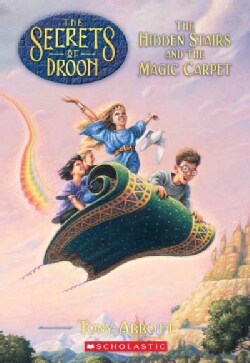
In my late elementary years, I began to get into fantasy book series.  These included, most notably The Secrets of Droon Series by Tony Abbott and the Harry Potter Series by J.K. Rowling.  These books allowed me to escape from reality and enjoy reading.  Feeling the accomplishment of advancing and eventually completing a series of chapter books was very rewarding to me at this stage of my life.  In addition, when I was going through the confusing times of middle childhood, transporting myself into these fantasy settings proved to be very therapeutic.

In Junior High, the focus of my reading shifted to books that included historical aspects or historical events of significance.  These books included Night, a work by Elie Wiesel about a first person account from a Holocaust survivor, and The Wave by Todd Strasser, which depicts a Nazi undertoned classroom experiment gone horribly wrong.  I was able to relate to the characters in books such as these, which therefore gave me a better grasp of history and increased my enjoyment.  As a future History teacher, I hope to incorporated literature such as the novels above to humanize the subject of History while hopefully making a subject most students see as dull and unimaginative more entertaining.  As a student myself, once I found entertainment in the subject of History through literature.  I hope to instill this love of history through literature to my future students.
 
In recent years, the focus of my readings has primarily been centralized on assigned classroom work and keeping up with the news and current events.  Keeping up with the world around us is extremely important in our society.  Reading allows us the opportunity to understand events and topics from different perspectives.  In addition, reading enables us to develop our own opinions through the knowledge we acquire.  Reading other’s opinions different to our own encourages open-mindedness, which is an extremely vital but lost art in many facets of our society.  While I do not read near as much as I would l like to, I still consider myself an active reader as reading is a central aspect of my life.

As a future teacher, I hope to assist the development of the reader autobiography of future generations.  I recognize the importance of reading in my life and hope to inspire my students to find the importance of reading in their own lives.  I was able to keep a positive attitude about reading from development to today because I was inspired by avid readers in my life. Luckily, throughout my development, I had numerous educators and role models in my life that promoted the importance of literature.  Now, I hope to be the proponent of literature in the lives of my future students.

The Importance of Running Records


As we begin the Running Records project, it is important as future educators that we understand not only how to do running records, but why we should do running records in our classroom.  Understanding the importance of running records right off the bat will establish more significance to this project and our future careers.

Especially for Kindergarten through 3rd Grade students, as children are just beginning to learn to read, individual assessment is crucial in order to identify which cueing systems a student is and isn't using.  This knowledge is essential in individualizing instruction for struggling developing readers.  However, as students grow older and reach their middle school years, students begin to read to learn. Likewise the focus of individual assessment shifts to the understanding of why students cannot comprehend certain material.

Prompting independence in reading by asking specific questions during individual time with a student helps develop successful patterns. Students should always be reading for meaning.  If a student is not reading for meaning, trying an easier reading level may help build up their semantic cuing system.  Reading records help identify these needs for students.

Recording what children are reading compared to the actual text helps us determine the cueing abilities and needs of the child. By determining what the child is reading, if they are reading with comprehension and intonation, and if the book is within the child's zone of proximal development, educators can best tailor an education plan to fit the student’s needs.

A note I found interesting through this week’s readings and videos is how the instructor from the Leeward Community College referred to educators who use running records as "literary detectives."  This description really resonated with me.  Running records are the tools educators use to uncover “clues” into how a child is reading and comprehending.  If an educator is able to successfully interpret these clues, they can solve the mystery of an individual’s strengths and weaknesses as a reader.  Having the knowledge of these strengths and weaknesses ultimately assists the educator in providing the best possible education for the student.

Monday, March 4, 2013

Double Duty: Teaching a Language while Teaching Reading

Growing up in a largely homogeneous rural area of West Central Ohio, I had no experience through my academic career watching my teachers instruct reading for English language learners. However, with the changing demographics of our schools, knowing how to teach reading instruction for English language learners is a vital skill for all future teachers. The Graves text highlighted many useful strategies for teaching reading to such learners throughout Chapter 14. I would like to take the opportunity with this blog posts to highlight what I view as some of the most significant.
  1.  Recognize and Build on Strengths (Pg. 418)
Learning a new language can be an overwhelming task. I have experienced this firsthand while learning Spanish. However, if an instructor is able to point out an area in which a student excels at, is able to give them meaningful positive praise, and is able to custom tailor a plan to capitalize their learning upon that strength, the student is being set up for success. This is a technique that I believe is at the core of any educational practice. Whenever a student is faced with a difficult task (like learning a new language) and they realize they are making progress, they are more motivated to continue their hard work.

      2. Take Advantage of the 20 Percent Rule (Pg. 421)

The text points out that overlap between different languages can be as much as 20 percent. Educators can use these words to reinforce their students using their first language to support the learning of the second. If a teacher is able to incorporate words with similarities between both languages, the new language learner can see some familiarity with the words and help build their confidence in learning the language. While learning Spanish, it was always comforting to see words that were the same in both English and Spanish (ie. natural/natural, chocolate/chocolate, and animal/animal). Psychologically, I looked at this occurrence as one less word I needed to worry about and made me feel less overwhelmed. If teachers are able to incorporate such word pairings into the readings they give their English learner students, it may help the students feel less overwhelmed.


      3. Involve Other Speakers of the Student’s Language (Pg. 425)

While teachers should always strive to involve parents and siblings into a child’s learning, this is especially important in cases involving English-learners. Teachers often have to realize that they are not always super heroes. Having the humility to reach out to other speakers of a student’s native language is a vital skill in best assisting a child’s learning. No one knows a child’s needs better than their family. Using the family and other native speakers as a resource in helping the child learn English is important. Establishing a community of students in the same situation of learning English can help create a support structure that assists them in helping each other out.
 
In order to best teach students, I find it useful to recall the struggles that I faced while learning a second language and relate them to the techniques Graves provides in the text. Although I have never experienced learning instruction for English language learners firsthand, I believe that with the knowledge and implementation of the above strategies, I am prepared to instruct reading to any English learner I may come across in my future classroom. 
 

Tuesday, February 26, 2013

Understanding Comprehension through "Chopsticks"

I must admit… I was a little hesitant before reading “Chopsticks” by Jessica Anthony and Rodrigo Corral.  I really have never delved too deeply in the world of graphic novels, so when we were assigned this book, some uncertainty came over me.  This was surely going to be a new experience! 

Relying nearly entirely on images to tell the story, this novel was truly unlike any book I have ever read.  However, it was this format that facilitated an environment of deep engagement for me.  I found myself deeply engrossed in the analysis of each image in order to comprehend the development of the plot.  The very nature of the book required you to focus your attention on the images.  Searching for “clues” hidden within the pictures became a regular and enjoyable routine for me.  Honestly, I have rarely ever reached the level of engagement I achieved while reading this novel. 

For me, this novel proved that not all great novels have to be filled with words.  The authors of the novel were able to masterfully convey plot and emotion relying almost exclusively on images alone.  The photo albums, post cards, newspaper articles, and letters all added a sort of realism to the novel that text alone has a difficult time achieving.  In addition, I believe the young love story genre transferred well into this medium.

After enjoying this novel, I realized that many of the comprehension strategies I have used to understand this book aligned with the Key Comprehension Strategies from Chapter 11 of the Graves text.  The foreshadowing of the news report and investigation of the disappearance of famous pianist Glory Fleming served the role of Establishing a Purpose for my reading.  I was immediately intrigued to find out what events led up to her disappearance. Using Prior Knowledge came in handy when remembering that Glory’s late mother worked for W.J. Import-Export, the same wine distributor Frank’s mother gets her wine from.  Throughout the book Making Inferences and Asking and Answering Questions kept me engaged and in tune to what was going on to. With so many detailed illustrations, it was vital to Determine What is Important in every image to get the most out of the text.

 The absence of words for this novel served as sort of a handicap for advanced readers. The option to find deeper meaning through text was not available, so the reader was forced to make inferences through pictures.  So, in order to understand the novel, mature readers were forced to use skills early readers use when they read such as making observations and inferences by looking at the pictures to develop comprehension.

Personally, this book served as sort of an exercise for me in recalling strategies younger readers use to comprehend text.  As a future teacher, this recollection is important in understanding how young readers develop their comprehension.
I look forward to the class discussion on “Chopsticks” and how it relates to the Graves text.

Tuesday, February 12, 2013

Setting Students up for Success


Reading fluency is at the very core of this week’s reading from Chapter 8 of the Graves et al. text (2011).  After reading this chapter, it is my belief that the establishment of young students reading rapidly, smoothly, and correctly without error is best facilitated through active reading over time.  Educators have a large role in developing both active reading and reading fluency in young readers.   
Above all, I believe an important element of developing fluency for young readers is matching students and texts.  Matching young readers with appropriate texts helps ensure that you are setting them up for success in reading.  As the book notes, there are three main factors that should be taken into consideration: (1) the students’ reading proficiency and motivation (2) text difficulty and accessibility and (3) your personal and professional knowledge about your students, the books and other reading materials in the classroom, and various purposes for which students are reading. (Graves, Pg. 244)

If a student is given a text that is too difficult or not interesting to them, they may very well give up on it or get frustrated and refuse to read.  If a student is given a text that is too easy for them, they may lose interest and read less frequently.  Finding the right balance of matching a book with both a student’s skill level and interest takes time.  However, taking this extra time is truly the difference between what makes a good and a great teacher.

As a teacher, I want my students to not only read for my class, but begin a journey down the road of a lifetime of reading.  Reading fluency can only be fully developed through practice.  As the saying goes, “practice makes perfect.”  Therefore, by setting students up with appropriate texts, we are giving students the best avenues to practice their reading fluency and therefore best setting up our students for success in reading both inside and outside the classroom.

Monday, February 4, 2013

A Framework for Intervention


Throughout Chapter 5, Differentiating Instruction and Intervention, of the Graves et al. text (2011), a large portion of the reading consisted of different strategies and ways to implement intervention in the modern classroom.  It is important to note that there is not one single approach to intervention that is ideal for everyone.  Also, differentiated instruction will not ensure the success of all students. Students near the top of bottom skill level of any group may receive too much or too little intervention.  Given the time and resources available, teachers must find and implement strategies that give the most students the best opportunity to reach their full potential.  Developing strategies and plans for intervention helps ensure that success.

I believe the text points out some interesting and effective strategies that I look to implement in my own classroom.

1. Explicit Strategy Instruction- Intervention instructors should always provide clear explanation and modeling of reading strategies for identifying words, determining meaning, or understanding text.

2. Mediated Scaffolding- Support through hints, suggestions, and models are useful when students learn new reading skills

3. Strategy Integration- Students should always know WHY they are learning a particular topic.  Knowing “why” helps create meaning and purpose so students can apply what they learn to other areas.

4. Priming Background Knowledge- Review previously learned topics before introducing new material.  Many students need reminders of what they learned previously beforing warming up their brains to apply new material.

5. Judicious Review- Students who struggle with reading can never have enough review.  Developing different review strategies to implement in the classroom is important for intervention teachers.  Using effective strategies continuously helps ensure success.

6. Well-paced Instruction- Intervention teachers must learn to get the most out of the classroom time they are given.  Focus of activities should be on content and not procedural steps.  Promotion of interest, engagement, and attention is provided through these strategies.

7. Motivation- Confidence is gained through progress, which does not occur without timely feedback.  Other strategies the text highlights are differing the pace of the lesson and engaging students through activities.

Using these guidelines with well-trained professionals working with students in small groups over an extended period of time will help create an environment for a successful intervention program where students quickly get back on track.

Tuesday, January 29, 2013

Facilitating Reading Throughout the School Day

Of all the material covered in Chapter Six- Emergent Literacy of Teaching Reading in the 21st Century by Michael Graves, I found the sample “Kindergarten Scenario” to be the most interesting.  I believe that this teacher does an outstanding job of facilitating reading skills throughout the school day, which is an aspect of Education that we have learned is very important and often overlooked.

This teacher’s “warm-up” rhyming and sounding out activities, how this teacher incorporated three ability-based small groups into her teaching, and how see implements nonfiction text into her social studies and science instruction were particularly interesting.

Throughout my experiences in the classroom, I have seen many different teachers and their different styles of teaching and schedules of what they like to accomplish.  But, until now, I have never seen an hour-by-hour lesson plan of a teacher such as this one. This sort of lesson plan essentially condenses an entire day of observation into a quick glimpse into a teacher’s and student’s day.  You could arguably learn more from reading a dozen of teacher’s detailed lessons plans than observing one teacher the entire school day.

As future teachers, it is important to give thought into how we are going to incorporate literature and reading in throughout the school day. I believe that through direct observation and through reading lessons plans such as the one listed in the text, it is possible to develop a sound understanding of ways to develop readers beyond subject.  With this sound understand, we can find ways to implement reading into our lessons that is tailored to our own unique teaching style and personality.  Using the knowledge and experience of current teachers through observations or lesson plans such as the one provided in the book are both great resources to develop effective reading development practices in the classroom throughout the entire school day.

Thursday, January 24, 2013

This I Believe…


In my Reading Foundations course this week, we completed a short exercise based on the NPR series “This I Believe.”  I would like to take the opportunity to share my short essay with you:

This I Believe…

Modeling is the Key to Success

Think back to a time where one’s actions, whether a simple gesture, prophetic words, or just lending a helping hand, has inspired you to better your own life or the lives of others.  This individual may or may not of none it at the time, but they made a difference in your life.  These profound individuals in our lives are called role models.  Role models all invoke an inspirational sense of self-improvement in all of us.  We strive to reach and achieve the certain level of success we see in our role models.  When role models are active influences in our lives, they make the most immediate impact.  For our nation’s youth, teachers have the unique opportunity of engaging with young people on a day to day basis.

Especially in the field of Education, I believe these models of behavior are very important in developing successful patterns of learning.  If someone that a student cares about exhibits patterns of regular reading and writing both academically and for enjoyment, students are much more likely to exhibit these behaviors.

However, we must always be aware that not all students have these models in their lives.  As teachers, modeling effective reading and writing strategies in our students is essential.  This can be as simple as keeping a leisure reading book on the top of your desk to keeping an active journal to write alongside your students.  Often times modeling effective behaviors in Education is as simple as practicing what you preach.  In order to make the most impact on student’s study and reading habits, it is important for teachers to demonstrate to their students’ successful behavior.  In return, student will exhibit these effective learning behaviors and become positive influences in the lives of others.  

This I believe.

Tuesday, January 15, 2013

Welcome!


Hello!
My name is Kabe Eichenauer and I am currently a second year undergraduate student studying Middle Childhood Education at The Ohio State University.  Through the next couple months, I plan on using this blog as a resource to communicate my thoughts, feelings, and perspectives on reading education techniques as I study the course “Reading Foundations”.  It is my hope that through reading this blog, you will gather some entertaining insight on education through the perspective of an aspiringn teacher. I hope you will join along with me as I embark on this exciting journey deeper into the educational realm!