Monday, March 25, 2013

Critiques of Running Records

For the past week, we have been studying running records with a primary focus on their effectiveness and usefulness when correctly implemented into a classroom.  However, just like with any aspect of life, no one educational technique is perfect. 

Ken Blaiklock of the UNITEC Institute of Technology in Auckland, New Zealand wrote an enlightening paper examining a few of these critiques. Throughout the paper, Mr. Blaiklock questions the value of running records as a assessment technique. I would like to take the time with this blog post to highlight some of the not-so-positive aspects of running records.

1)      The appropriateness of using running records for beginning and fluent readers

·        Blaiklock questions what age group running records are intended for and claims Marie Clay does not “elaborate on what such a special reason might be” to be giving a running record an older student (Pg. 5). Not having a set guideline of what ages are most appropriate for running records may result in missuse of the program by schools and educators. Blaiklock also claims that “running records rely on the assumption that the processes underlying oral reading are the same as those underlying silent reading”. He points out that that oral reading maybe more representative of reading for beginning readers than for older, more fluent readers (Pg. 5).  This discrepancy between ability to read aloud and ability to read silently across age demographics could be cause for error in the accuracy of the running record assessment.

2)      The use of running records to assess accuracy rate

·        Clay stresses the importance of consistency of assessment for running records for use in comparing one performance to another. Blaiklock argues that "this consistency is challenged by the questionable assumption that the texts used for running records have been accurately graded into difficulty levels... because imprecise procedures are often used to assign books to particular difficulty levels(Pg. 6).”  When different and inaccurate procedures are used to evaluate book’s reading records, the accuracy of your running assessment is often challenged as well.  In addition, factors such as if a child is familiar with a passage or not also has an impact on the accuracy rate (Pg.7). Factors such as these are often not noted on running records, but do effect a student's accuracy rate.

3)      The value of self-corrections

·        Blaiklock continues on to question the importance of self-corrections. He claims that “self-corrections may not be a sign that a reader is monitoring his or her reading but an indication that a reader may be responding prematurely to a word, before adequately processing information about the word’s identity (Pg.11).”  Should this be seen as a positive or negative? In addition, further research has found that “no differences in self-correction rates between high and low progress readers when they read text at equivalent error rates (Pg. 11).”  While it is important to note if a child is implementing imporivement in self-monitering, with no difference in self-correcting rates between high and low level readers, how important is it to track this rate? 

4)      The analysis of oral reading errors.

·        Blaiklock states that “an erroneous interpretation of a running record can lead to ineffective ideas about what instruction is required (Pg. 15).”  When an educator falsely identifies which type of error is made (meaning, syntax, and visual), they are giving a false representation of the cues a child uses.  Without this accurate knowledge, creating a truly effective intervention strategy is nearly impossible.

While I tend to agree with the usefulness of running records in the classroom, I always think it is healthy to look critically at educational practices to make sure we are making the most of our time with children in the classroom.  Blaiklock makes some interesting points that I will be sure to keep in mind when using Running Records in my future classroom.

Tuesday, March 19, 2013

Literacy Autobiography: My Journey as a Reader


As a future educator, reflecting on my own relationship with reading will help me better understand how my students may become interested in reading.  A sound understanding of my own personal story will help me guide my students along the journey of reading.  It is my hope that by taking the time to reflect through this blog post that I will gain a new perspective on what it means to become a lifetime reader.

Throughout my childhood to today, the stages of my life development can be marked by the reading of a piece of literature.  Books have the capability to transform you to a different time and place.  The books you are interested in during different stages of your life often mirror you development as an individual.

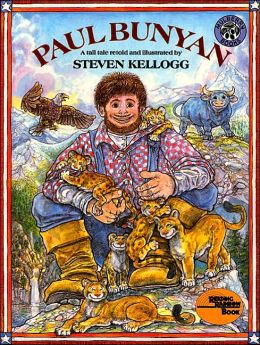
 Early in my development, from birth to kindergarten, I was fortunate to have a Grandmother who was a teacher.  Therefore, there was always plenty of books at my disposal and plenty of individuals excited to read them to me.  At this stage of my life, I really enjoyed fairy tales and tall tales.  These were stories that could be read to me through books and I could view through movies and television shows.  My favorite story of this time was Paul Bunyan.  I may have had half a dozen different versions of this story.  I enjoyed this story because it gave me time to spend with my Grandmother and Father and they were each able to offer entertaining interpretations of the story.  Having others read to me gave me the opportunity to develop relationships with those close to me. As a teacher, I will remember the importance of being read to at a young age and translate that knowledge into reading to my future classroom.

During my primary school years, when I was first learning to read, my favorite book was If You Give a Pig a Pancake.  This book was my favorite because it was one of the first “big books” I could read on my own.  I took great pride in reading it to my caregivers who once read it to me.  In addition, growing up on a pig farm, I could easily relate the main character of the book.  Finding books that are relatable, yet transported me to a different setting was very important to me at this stage of my life.  Ensuring that I match appropriate books to the interests and skill level of my students will be important to me as an educator because I saw this importance when I was developing as a reader.


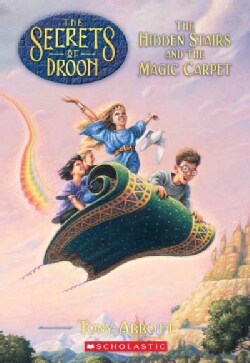
In my late elementary years, I began to get into fantasy book series.  These included, most notably The Secrets of Droon Series by Tony Abbott and the Harry Potter Series by J.K. Rowling.  These books allowed me to escape from reality and enjoy reading.  Feeling the accomplishment of advancing and eventually completing a series of chapter books was very rewarding to me at this stage of my life.  In addition, when I was going through the confusing times of middle childhood, transporting myself into these fantasy settings proved to be very therapeutic.

In Junior High, the focus of my reading shifted to books that included historical aspects or historical events of significance.  These books included Night, a work by Elie Wiesel about a first person account from a Holocaust survivor, and The Wave by Todd Strasser, which depicts a Nazi undertoned classroom experiment gone horribly wrong.  I was able to relate to the characters in books such as these, which therefore gave me a better grasp of history and increased my enjoyment.  As a future History teacher, I hope to incorporated literature such as the novels above to humanize the subject of History while hopefully making a subject most students see as dull and unimaginative more entertaining.  As a student myself, once I found entertainment in the subject of History through literature.  I hope to instill this love of history through literature to my future students.
 
In recent years, the focus of my readings has primarily been centralized on assigned classroom work and keeping up with the news and current events.  Keeping up with the world around us is extremely important in our society.  Reading allows us the opportunity to understand events and topics from different perspectives.  In addition, reading enables us to develop our own opinions through the knowledge we acquire.  Reading other’s opinions different to our own encourages open-mindedness, which is an extremely vital but lost art in many facets of our society.  While I do not read near as much as I would l like to, I still consider myself an active reader as reading is a central aspect of my life.

As a future teacher, I hope to assist the development of the reader autobiography of future generations.  I recognize the importance of reading in my life and hope to inspire my students to find the importance of reading in their own lives.  I was able to keep a positive attitude about reading from development to today because I was inspired by avid readers in my life. Luckily, throughout my development, I had numerous educators and role models in my life that promoted the importance of literature.  Now, I hope to be the proponent of literature in the lives of my future students.

The Importance of Running Records


As we begin the Running Records project, it is important as future educators that we understand not only how to do running records, but why we should do running records in our classroom.  Understanding the importance of running records right off the bat will establish more significance to this project and our future careers.

Especially for Kindergarten through 3rd Grade students, as children are just beginning to learn to read, individual assessment is crucial in order to identify which cueing systems a student is and isn't using.  This knowledge is essential in individualizing instruction for struggling developing readers.  However, as students grow older and reach their middle school years, students begin to read to learn. Likewise the focus of individual assessment shifts to the understanding of why students cannot comprehend certain material.

Prompting independence in reading by asking specific questions during individual time with a student helps develop successful patterns. Students should always be reading for meaning.  If a student is not reading for meaning, trying an easier reading level may help build up their semantic cuing system.  Reading records help identify these needs for students.

Recording what children are reading compared to the actual text helps us determine the cueing abilities and needs of the child. By determining what the child is reading, if they are reading with comprehension and intonation, and if the book is within the child's zone of proximal development, educators can best tailor an education plan to fit the student’s needs.

A note I found interesting through this week’s readings and videos is how the instructor from the Leeward Community College referred to educators who use running records as "literary detectives."  This description really resonated with me.  Running records are the tools educators use to uncover “clues” into how a child is reading and comprehending.  If an educator is able to successfully interpret these clues, they can solve the mystery of an individual’s strengths and weaknesses as a reader.  Having the knowledge of these strengths and weaknesses ultimately assists the educator in providing the best possible education for the student.

Monday, March 4, 2013

Double Duty: Teaching a Language while Teaching Reading

Growing up in a largely homogeneous rural area of West Central Ohio, I had no experience through my academic career watching my teachers instruct reading for English language learners. However, with the changing demographics of our schools, knowing how to teach reading instruction for English language learners is a vital skill for all future teachers. The Graves text highlighted many useful strategies for teaching reading to such learners throughout Chapter 14. I would like to take the opportunity with this blog posts to highlight what I view as some of the most significant.
  1.  Recognize and Build on Strengths (Pg. 418)
Learning a new language can be an overwhelming task. I have experienced this firsthand while learning Spanish. However, if an instructor is able to point out an area in which a student excels at, is able to give them meaningful positive praise, and is able to custom tailor a plan to capitalize their learning upon that strength, the student is being set up for success. This is a technique that I believe is at the core of any educational practice. Whenever a student is faced with a difficult task (like learning a new language) and they realize they are making progress, they are more motivated to continue their hard work.

      2. Take Advantage of the 20 Percent Rule (Pg. 421)

The text points out that overlap between different languages can be as much as 20 percent. Educators can use these words to reinforce their students using their first language to support the learning of the second. If a teacher is able to incorporate words with similarities between both languages, the new language learner can see some familiarity with the words and help build their confidence in learning the language. While learning Spanish, it was always comforting to see words that were the same in both English and Spanish (ie. natural/natural, chocolate/chocolate, and animal/animal). Psychologically, I looked at this occurrence as one less word I needed to worry about and made me feel less overwhelmed. If teachers are able to incorporate such word pairings into the readings they give their English learner students, it may help the students feel less overwhelmed.


      3. Involve Other Speakers of the Student’s Language (Pg. 425)

While teachers should always strive to involve parents and siblings into a child’s learning, this is especially important in cases involving English-learners. Teachers often have to realize that they are not always super heroes. Having the humility to reach out to other speakers of a student’s native language is a vital skill in best assisting a child’s learning. No one knows a child’s needs better than their family. Using the family and other native speakers as a resource in helping the child learn English is important. Establishing a community of students in the same situation of learning English can help create a support structure that assists them in helping each other out.
 
In order to best teach students, I find it useful to recall the struggles that I faced while learning a second language and relate them to the techniques Graves provides in the text. Although I have never experienced learning instruction for English language learners firsthand, I believe that with the knowledge and implementation of the above strategies, I am prepared to instruct reading to any English learner I may come across in my future classroom.